
Key Points:
Director’s comments
Steve Sanderson, commercial and bridging specialist at Clever Lending, comments:
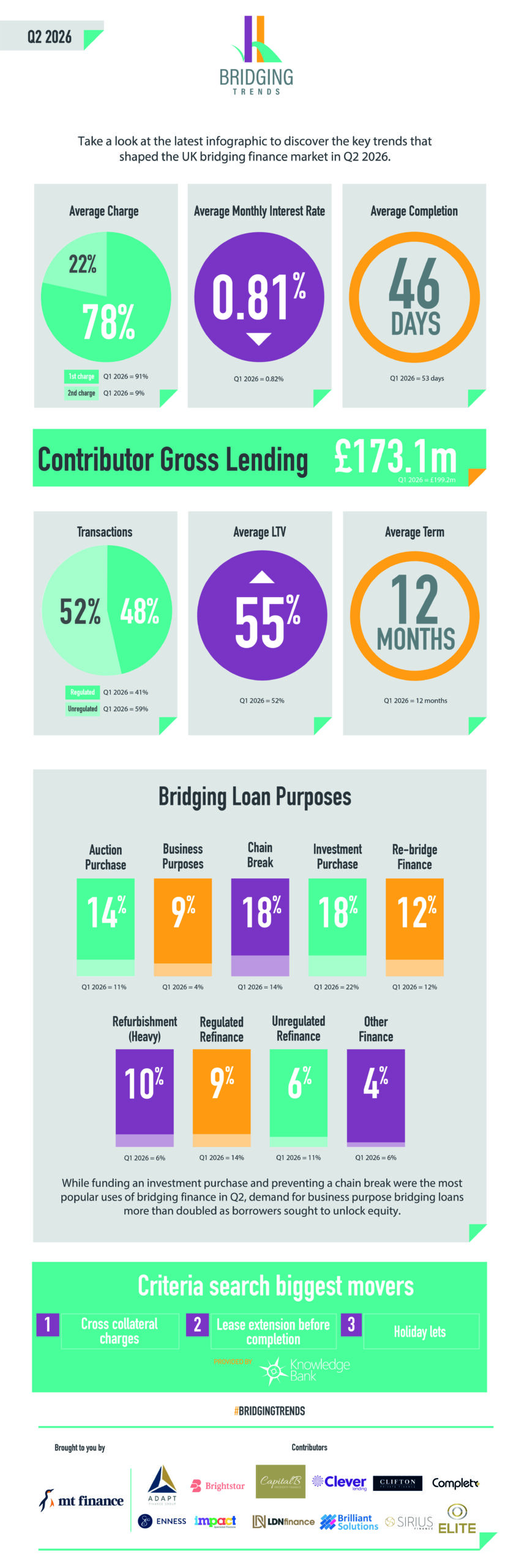
“The Q2 data should act as a reminder of just how versatile bridging loans can be. The fact that more borrowers are utilising second charges to access the equity where some products don’t allow is testament to the support brokers and lenders have been giving their clients to ensure a positive outcome is achieved. I expect this approach to thinking outside of the box to continue well into Q3 and Q4.”
Raphael Benggio, Bridging Director at MT Finance, comments:
“Considering the ongoing uncertainty, it was inevitable that the bridging industry was going to be impacted by global events. Instead of postponing transactions indefinitely, borrowers have just adapted and it is extremely encouraging to see that they continue to be supported by the specialist finance sector.”
Shane Chawatama, sales director at Knowledge Bank, comments:
“Bridging lending continued to shift towards larger and more complex cases in Q2. ‘Cross collateral charges’ was the standout riser for the second consecutive quarter, while ‘maximum property value’ also saw strong growth, suggesting increased demand for higher-value borrowing. ‘Development finance for commercial property’ was another notable mover, highlighting continued interest in commercial development opportunities and more sophisticated funding requirements. Commercial properties are continuing to be a good option for investors in the market.”